
From bare dirt to a real lawn
New Lawns and Complete Yard Installs
A new house with a torn-up yard isn't finished. What the builder leaves behind is usually compacted subsoil, tire ruts, and whatever got buried during construction. Grass won't grow in that, no matter how much seed you throw at it. A real yard install starts underneath, with the grade corrected and honest topsoil spread before a single seed goes down.
The short answer
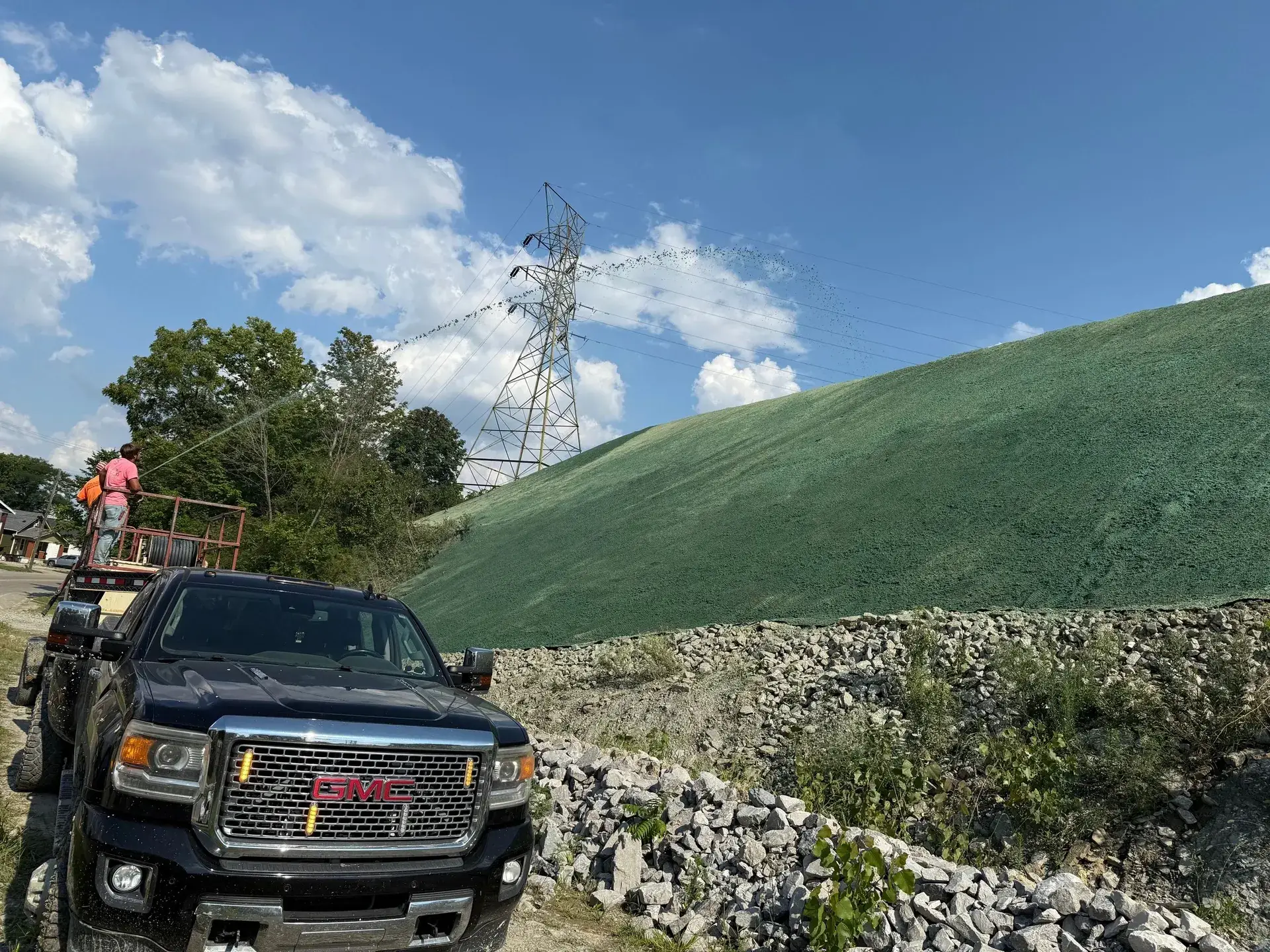
Pro Innovations installs complete new lawns after construction across Northern Kentucky: rough grade correction, screened topsoil delivered on our own trucks, final grading that sheds water away from the house, and seed and straw to finish. One crew handles the whole install from bare dirt to green. Call 859-910-9272 for a walkthrough and a firm number.
Pro Innovations builds yards the same way we build everything else in Northern Kentucky, start to finish with one crew. Our trucks haul the topsoil, our operators shape the final grade, and the same company seeds and straws it when the dirt work is done. One call covers the whole job instead of a hauler, a grader, and a landscaper who have never met.
We've been working this ground for over 35 years, from new subdivisions in Independence and Union to farmhouses outside Crittenden. If your yard is starting from bare dirt, this is the crew that gets it to green.
When you need us
The builder just handed you dirt
Closing day comes with compacted subsoil and tire ruts where a yard should be. That ground needs correcting before seed has any chance, because grass roots don't push through machine-packed clay.
The grass never really took
Thin, patchy turf that browns out every July is usually growing straight in clay with no real topsoil under it. More seed and more fertilizer won't fix a soil problem.
The yard holds water
Spongy ground all winter and standing water after storms mean the grade or the soil is trapping it. A yard install is where the pitch, the soil depth, and the drainage all get fixed at once.
Another project tore it up
A pool dig, an addition, a utility repair, or a water line trench leaves a scar across the lawn. We rebuild the whole yard so it reads as one lawn again, not a patched stripe.
What this covers
Complete yard builds
The full package after construction: rough grade fixed, topsoil hauled in and spread, final grade shaped, then seed and straw. You get a finished yard, not a punch list.
Topsoil delivery and spreading
Screened topsoil arrives on our own dump trucks and gets spread to a consistent depth, not dumped in a pile at the end of your driveway for you to figure out.
Final grading
Smooth, mower-friendly grades that pitch water away from the foundation. The slope is set before the lawn goes in, because fixing it afterward means tearing the lawn back up.
Seed and straw
Our standard finish, and an honest alternative to sod. Seed roots into your soil instead of sitting on top of it, and it costs a lot less to cover the same ground.
Rough yard repair
Rutted, bare, or half-dead lawns get regraded, dressed with topsoil, and reseeded. You don't need a brand-new house to need a new yard.
Grade prep around hardscapes
Final grades worked cleanly around patios, sidewalks, driveways, and beds so the lawn meets the hard edges the way it should.
What moves the number
We quote after a site walk, not from a satellite photo. These are the honest variables.
Topsoil depth and area
Depth times square footage is the biggest line on a yard install. The builder may have left a decent cap or an inch of scraped clay, which is why we measure on the walkthrough instead of guessing.
Buried construction debris
Lumber scraps, brick, concrete washout, and stumps get graded over during construction. Pulling debris is quick when it's shallow and real work when it's not.
How far off the grade is
A yard that already pitches away from the house needs finish work. One that ponds against the foundation needs regrading first, and that's a different scope.
Access and obstacles
Fences, buried utilities, tight side yards, and finished driveways decide which machines fit and how carefully we have to work around everything that's already done.
Trucking
Topsoil is heavy, and hauling is usually a third party's markup on somebody else's quote. Ours comes in on our own fleet, which is part of why one number from one contractor beats three.
The seeding window
Seed itself is cheap. Seeding out of season and doing it twice isn't, so sometimes the smartest schedule is grading now and seeding when the calendar is right.
Topsoil coverage: how far the material actually goes
| Spread depth | One cubic yard covers | One truckload covers (10 to 12 yd) | Typical use |
|---|---|---|---|
| 2 inches | About 160 sq ft | About 1,600 to 1,900 sq ft | Dressing an existing lawn before reseeding |
| 3 inches | About 110 sq ft | About 1,100 to 1,300 sq ft | Minimum for a new lawn over corrected subgrade |
| 4 inches | About 80 sq ft | About 800 to 1,000 sq ft | The standard new-yard install |
| 6 inches | About 55 sq ft | About 550 to 650 sq ft | Rebuilding badly scraped or debris-filled ground |
Loads vary with moisture and truck size. This is orientation, not a quote: call 859-910-9272 and we'll measure your yard.
Topdress and reseed, or rebuild from the grade up?
Not every rough yard needs a full install, and we'll tell you which one you have. The honest split comes down to whether the problem is in the turf or under it.
Topdress and reseed
Best for: Lawns where the grade already works and the drainage is fine, but the turf is thin, worn, or scarred by one small project.
The trade: Faster and cheaper, but it can't fix a bad pitch, buried debris, or a soil profile that's all clay. Dressing over those problems just re-grows the same failure.
Full yard rebuild
Best for: New-construction subsoil, ponding against the house, buried debris, and lawns that have failed more than once.
The trade: Costs more and takes the yard down to dirt for a few weeks while the new stand comes in, but it fixes the cause instead of the symptom, once.
How the job runs
01
See what you're starting with
We walk the yard and check the grade, the soil, and where water wants to go. The quote covers the whole install, so you know the full number before we start.
02
Fix the ground first
Ruts come out, buried construction debris comes up, and the rough grade gets corrected so the yard sheds water away from the house.
03
Bring in the topsoil
Our trucks deliver it and our equipment spreads it. Because the hauling and the spreading are the same crew, there's no waiting on a delivery that's holding up the grade.
04
Seed, straw, and hand it over
Final grade gets raked out, seeded, and strawed, and we leave you straight instructions on watering so the stand comes in thick.
The dirt work on most yard installs runs two to four days: a day or two to correct the grade and pull debris, a day to spread topsoil, and a day to finish grade, seed, and straw. The part you can't rush is the calendar. Seed wants to go down in early fall or in spring, so if your build finishes in the wrong season we'll do the grading now and time the seeding for the window when it'll actually take. Green-up follows in two to three weeks, and a stand you can mow comes a few weeks after that.
Skid steers
Finish grading, topsoil spreading, and working the tight side yards on subdivision lots.
Track loaders
Spreading topsoil and grading on soft or rutted ground without tearing it up worse.
Dozers
Rough grade correction on bigger lots and acreage yards.
Excavators
Pulling buried construction debris and cutting swales where the yard needs to carry water.
triaxle dump fleet
Topsoil in, debris and spoil out, on our schedule instead of a supplier's.
Most yard companies have to buy their topsoil delivered and rent their grading equipment. We run our own triaxle dump fleet, our own skid steers and track loaders, and operators with over 35 years on Northern Kentucky ground. That's why a complete yard install here is one crew and one week of coordination, not a month of scheduling subs.
Built for Kentucky ground
Ask why new lawns struggle here and the answer is under your feet. The ridgetops where most Northern Kentucky subdivisions get built sit on soils like Nicholson and Rossmoyne, which carry a dense fragipan about two feet down. Water can't soak through the pan, so it perches right where roots want to live, and a builder-graded lot that looks fine in August turns spongy from December through April. On the slopes the soil flips to Eden clay weathered off the Kope shale, slow to drain and quick to compact, and construction traffic packs it harder still. Throw grass seed on that and it germinates, limps through one summer, and quits.
This region also catches roughly 43 to 45 inches of rain a year on ground with a limited ability to take it in, which means the grade is the drainage system. That's why our installs put the water plan first: positive pitch away from the foundation, low spots filled instead of seeded over, and downspout or curtain drains added where the fragipan guarantees the yard can't dry itself. A real topsoil layer on top gives roots somewhere to live above the clay. That's the difference between a lawn that looks green in the closing photos and one that's still green in July.
Questions we hear a lot
How do you install a new lawn after construction?
We fix the rough grade first, then spread topsoil, shape the final grade so water runs away from the house, and finish with seed and straw. Skipping the grade and soil steps is why so many new-construction lawns fail, so we don't skip them.
Do you install sod or seed?
We finish yards with seed and straw. It roots into your soil instead of laying on top of it, it handles Kentucky clay better over time, and it covers the same ground for a lot less money. It takes a few weeks longer to look green, and we think that trade is worth it.
How much topsoil does a new yard need?
It depends on what the builder left behind. Some yards need a dressing, some need several inches over the whole lot. We measure on the walkthrough and quote it as one number, and since the topsoil comes on our own trucks you're not paying a separate delivery company on top.
Can you fix a yard the builder left rough?
Yes, that's most of this work. Ruts, ponding spots, buried scrap, and thin patchy grass are all fixable. We regrade, add topsoil where the yard is starving, and reseed it right.
When is the best time to seed a new lawn in Kentucky?
Fall is the sweet spot, and spring runs second. If you're closing on a house in July, we can still do the dirt work now and time the seeding for when it'll actually take, instead of watering a lawn all summer just to watch it struggle.
Will my new yard drain away from the house?
It will when we're done. Setting that pitch is the whole point of the final grade, and if your lot has bigger water problems than grading alone can solve, we handle drainage work too, so it's still one contractor.
Why does grass not grow in new construction yards?
Because the topsoil usually left with the builder. What remains is subsoil packed hard by machine traffic, sometimes with debris graded over it. Grass germinates in that but can't root, so it thins out and dies back every summer until the soil underneath gets fixed.
What kind of grass grows best in Northern Kentucky?
Turf-type tall fescue is the workhorse here. It handles the clay, the summer heat, and our in-between winters better than anything else, and it's what we reach for on most installs, sometimes blended with a little Kentucky bluegrass for fill-in.
How long does it take for a new lawn to grow from seed?
You'll see green in roughly two to three weeks when it's seeded in season and watered right, and a stand thick enough to mow a few weeks after that. The lawn really fills in over its first full year, which is another reason fall seeding wins: the roots get two mild seasons before their first hard summer.
Do you remove construction debris buried in the yard?
Yes. Lumber, brick, concrete chunks, and whatever else got graded over comes up during the regrade and leaves on our own trucks. Burying it deeper just moves the dead spot down the calendar.
How much does a complete yard install cost?
It rides on the square footage, how much topsoil the ground needs, and how far off the grade is, so we walk the yard before we quote. What you get is one firm number that covers the hauling, the grading, and the seeding, because the trucks and the crew are all ours.
Yard Installs near you
Local pages for the towns where this work keeps our crews busiest.
Often paired with
Ready to talk yard installs?
Walk us through the project and we'll walk the site. Straight answers, firm numbers, one contractor.