
Grade it, drain it, close it out
Production work, from rough grade to green grass
Every site reaches a point where the heavy work is done and the ground still isn't finished. The pad is in, the utilities are buried, and what's left is the part a homeowner actually sees and walks on: the grade that moves water away from the house, the swale that keeps a backyard from turning into a pond, the topsoil and seed that decide whether the lawn takes or washes out in the first storm.
The short answer
Production work is the finish stage of sitework: rough and final grading, drainage, retaining walls, topsoil and yard installs, and seed and straw. Pro Innovations runs it across Northern Kentucky for production homebuilders and homeowners alike, with our own equipment and a triaxle dump fleet. Call 859-910-9272.
That's production work, and it's the stage where a job either closes out clean or comes back as a callback. We've built a big part of this business on it. Production builders don't hand out finish grades to whoever is cheapest, because a grade that fails is their warranty claim, not ours.
What production work covers
Five services that close a site out
Grading
Driveways, yards, and building pads shaped so water runs off them, not into them.
DetailsDrainage Solutions
French drains, downspout tie-ins, and regrades that send water away from your house.
DetailsYard Installs
Topsoil, final grade, and a new lawn that takes. Complete yard builds after construction.
DetailsRetaining Walls
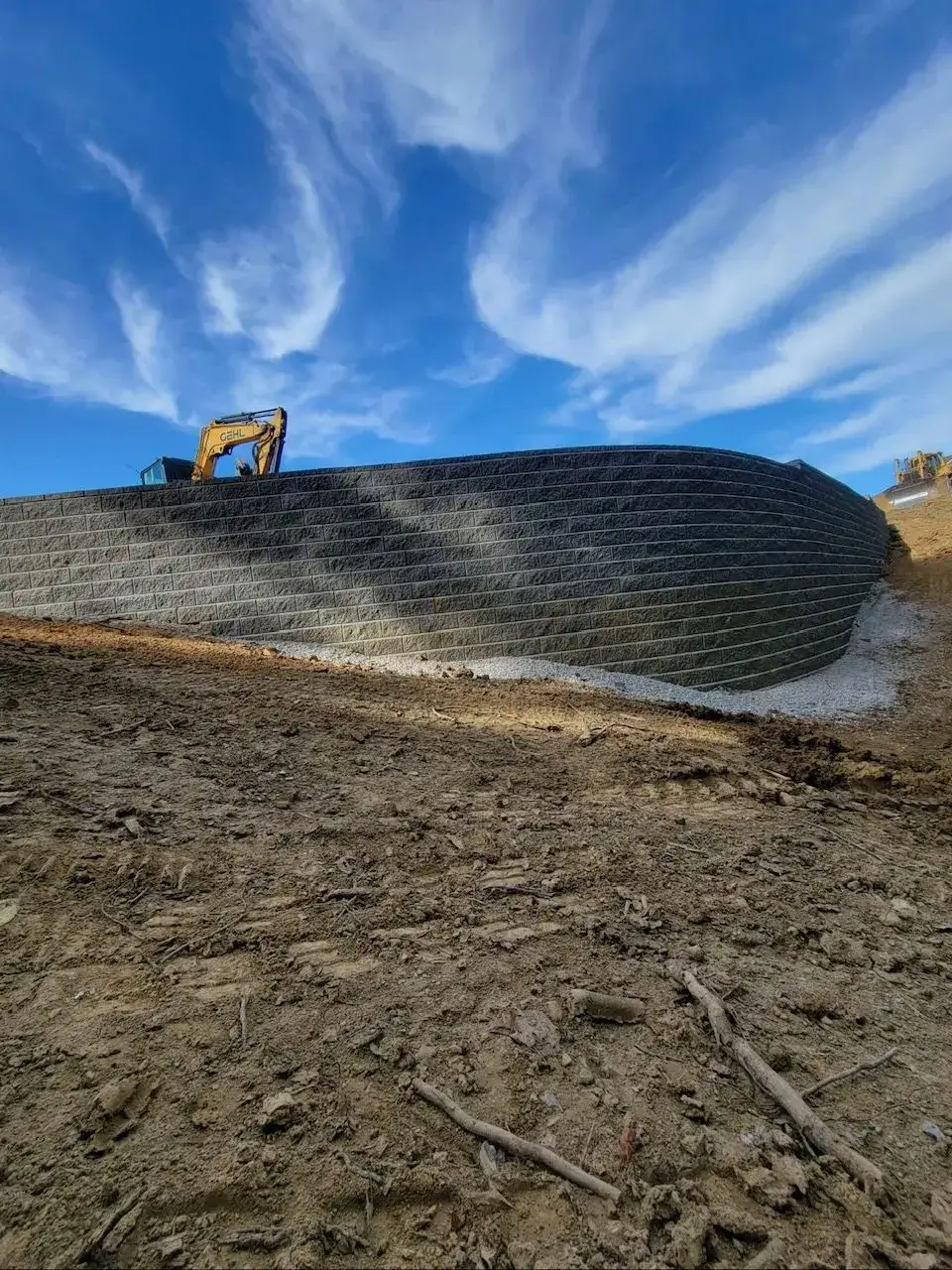
Block and hillside walls built with the drainage behind them, not bolted on after.
DetailsSeed & Straw
Finish grade, seed, and straw that turns bare construction dirt into a lawn.
DetailsBefore this stage
Land Development
Clearing, excavation, utilities, pads, concrete, and trucking. The work that gets raw ground ready to build on.
In order
How a site actually gets finished
Rough grade
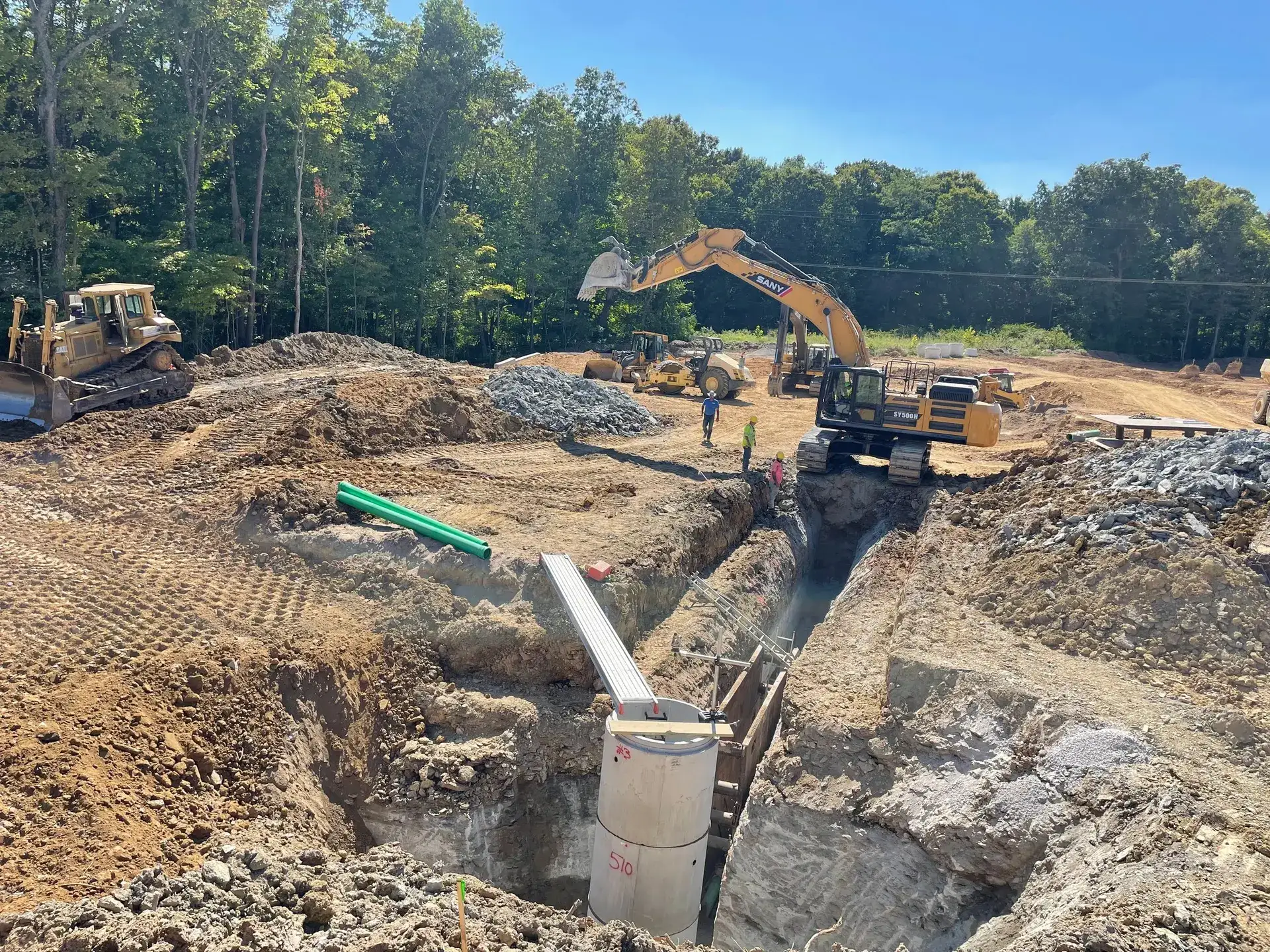
We shape the lot to design elevations once the structure is out of the ground: cut and fill balanced, slopes set, and positive drainage established away from the foundation before anything else goes in.
Drainage
Downspout lines, footer drains, area drains, swales, and culverts. Water is the single most common reason finish work fails, so we solve it in the dirt rather than hiding it under sod.
Retaining walls
Where the grade can't be walked down, we build it up. Segmental block and boulder walls, engineered where the height calls for it, tied into the drainage plan instead of fighting it.
Final grade and topsoil
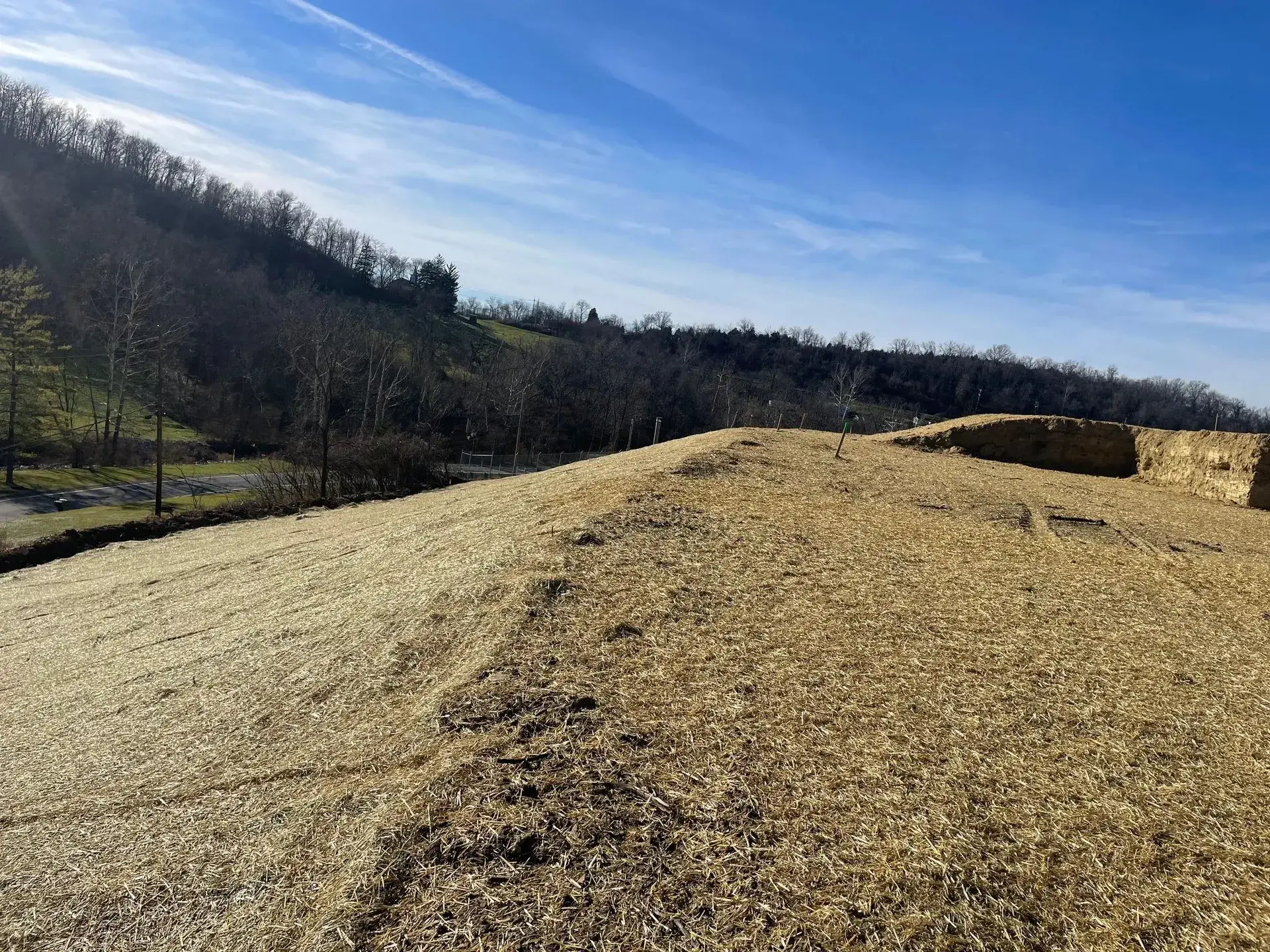
The last quarter inch is the one people notice. We fine grade to design, spread and rake topsoil, and leave a surface that's ready to seed with no low spots holding water.
Seed and straw
Seed, fertilizer, and straw or blanket, matched to the season and the slope. This is also the erosion control that keeps a finished site in compliance until the stand comes in.
One crew, one schedule.
All five stages run with our own equipment and our own drivers, so nothing waits on a sub to call back.
For production builders
Built on production schedules
For years we've run production grade work, final grades, and topsoil for Drees Homes, one of the country's largest family-owned homebuilders, and we've performed land development for Fischer Homes. That work is repetitive, it's scheduled tight, and it gets inspected. It's also the reason we own our iron and run our own drivers instead of subbing it out: when a builder needs finish grades on twelve lots before the sod truck comes, the schedule has to belong to one contractor.
We scaled into that work without a sales team and without advertising. Builders kept calling back because the grades held and the dates held, and the demand took care of itself.
For homeowners
The same crew, for one yard
You don't need a subdivision to hire us. A lot of what we do is one house at a time: a backyard that's held water since the day it was built, a failing railroad-tie wall that needs replacing with block, a new build where the builder's grade left you with a swamp along the fence line.
It's the same equipment and the same crew that runs builder work, which is mostly a scheduling advantage for you. We walk the ground first, because water problems are almost never where the standing water is, and no satellite photo has ever shown us where a yard actually drains.
Questions we hear a lot
What is production work in construction?
It's the finish stage of sitework: rough and final grading, drainage, retaining walls, topsoil, and seed and straw. The name comes from production homebuilding, where the same package gets run lot after lot on a schedule. We do the same work on single lots and custom homes.
What is the difference between land development and production work?
Land development gets raw ground ready to build on: clearing, excavation, utility trenches, building pads, and the trucking that goes with them. Production work is everything after that, the finish stage that closes a site out: grading, drainage, retaining walls, topsoil, and seed and straw. Most jobs need both, and we run them with the same crew and the same schedule.
What is the difference between rough grade and final grade?
Rough grade shapes the lot to within a few inches of design once the house is out of the ground, and establishes drainage away from the foundation. Final grade is the fine pass after utilities and hardscape are in: it corrects low spots, sets the topsoil depth, and leaves a surface that's ready to seed or sod.
How much does it cost to grade a yard in Northern Kentucky?
It depends on the size of the area, how much dirt has to move, whether topsoil is being imported, and how the equipment gets in. That's why we walk the ground before quoting. Call 859-910-9272 or send the estimate form and we'll come look at it.
Why does my yard hold water after it rains?
Usually the grade runs the wrong way, the soil is compacted clay that won't take the water, or the downspouts dump right at the foundation. Northern Kentucky's heavy clay soils make all three worse. The fix is almost always regrading plus a drain, not one or the other.
Do you install drainage and retaining walls together?
Yes, and they should be planned together. A retaining wall without drainage behind it is a wall waiting to lean. We size the drainage into the wall from the start rather than adding it later.
Do you do work for home builders?
Yes. Production grade work is a core part of the business. We've run grade work, final grades, and topsoil for Drees Homes for years, and land development for Fischer Homes. Builders get their own point of contact and a schedule that doesn't depend on a sub answering the phone.
When is the best time to seed a new lawn in Kentucky?
Mid-August through late September is prime for cool-season seed here, and late winter into early spring is the backup window. We seed year round on active jobs and match the mix and the cover to the season and the slope, because a site can't sit bare waiting for perfect weather.
What areas do you cover for grading and yard work?
Grant, Boone, Kenton, Pendleton, Owen, Gallatin, Campbell, Bracken counties and the surrounding Northern Kentucky and Greater Cincinnati area, out of our yard in Crittenden. We run our own trucks, so getting there is our problem, not a scheduling excuse.
Yard holding water? Grade not finished?
Tell us what the ground is doing and we'll come walk it. Water problems are almost never where the puddle is.