
Move the water, save the yard
Drainage Solutions for Northern Kentucky Yards
Water always wins unless you give it somewhere to go. If your yard holds puddles for days after a rain, if the mower leaves ruts in July, or if the basement smells damp every spring, the problem isn't inside the house. It's the ground around it.
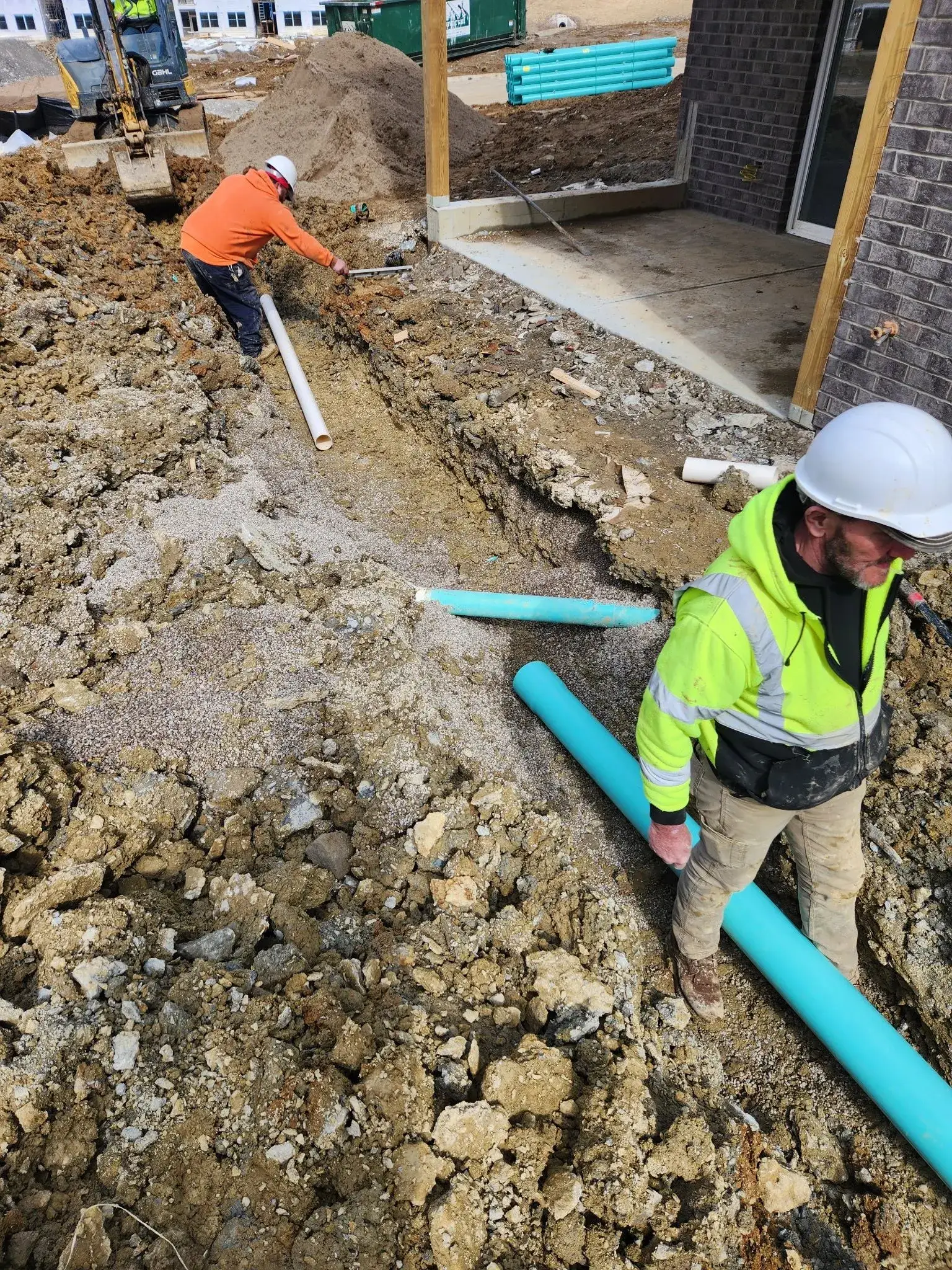
The short answer
Pro Innovations builds yard drainage across Northern Kentucky: French drains, buried downspout lines, catch basins, swales, and regrades that give water a way off your lot. We design the fix, install it with our own equipment, and restore the yard, one contractor start to finish. Call 859-910-9272 for a site walk.
Northern Kentucky sits on heavy clay, and the newer subdivisions in Boone and Kenton counties feel it worst. Builders compact the lot, the clay seals up, and every roof and driveway sheds water into a yard that can't absorb it. We've spent over 35 years figuring out where that water wants to go and building it a path.
Drainage jobs touch digging, pipe, grading, and restoration, and we handle all of it as one contractor. One crew designs the fix, installs it, regrades over it, and leaves you with a yard, not a trench line.
When you need us
Puddles that outlast the rain
Water still standing two or three days after a storm means the clay has sealed up and the water has no outlet. It won't fix itself, and every wet season makes the low spot lower.
Downspouts dumping at the wall
An inch of rain on 1,000 square feet of roof is over 600 gallons of water, and a short downspout delivers all of it to your foundation. Burying that discharge is the cheapest drainage win there is.
A damp basement or crawl space every spring
Musty air, efflorescence on the block, a sump that never shuts off. Interior symptoms almost always trace back to grade and roof water outside, which is where we fix them.
A lawn you sink into
Ruts from the mower in July, moss where grass should be, ground that squishes underfoot into May. That's water perched in the soil profile with nowhere to go but into your shoes.
What this covers
French drains
Perforated pipe in washed gravel, set to fall, wrapped to keep clay fines out. Built to collect the water your soil won't take and carry it to daylight.
Downspout and sump tie-ins
Buried solid pipe that takes roof and sump water from the foundation to a pop-up emitter or a natural outfall, instead of dumping it three feet from your basement wall.
Swales and surface regrading
Sometimes the fix isn't pipe, it's shape. We cut shallow swales and rework grades so water runs around the house and off the lot the way it should have from day one.
Catch basins and channel drains
Inlets for the low spots that can't be graded out: patio corners, driveway aprons, that one dip in the yard that becomes a pond every storm.
Wet basement fixes from the outside
Most wet basements start with bad exterior grading and short downspouts. We correct the slope and the discharge before you spend interior waterproofing money on a symptom.
Culvert and driveway drainage
Crossings, ditch lines, and culvert pipe sized so a hard rain goes under your driveway instead of over it.
What moves the number
We quote after a site walk, not from a satellite photo. These are the honest variables.
Feet of trench, and how deep
Pipe, washed gravel, fabric, and digging all scale with length and depth. A 30-foot downspout burial and a 200-foot whole-yard system are very different jobs.
Where the water can exit
The outlet drives the design. A lot with natural fall to daylight is a simpler build than one that needs a long carry, a pop-up emitter, or a dry well because the ground is flat.
The soil in the trench
Fragipan and clay dig clean but hold water in the trench. Shallow limestone means rock work near the surface. Saturated ground slows everything down.
What's in the way
Buried utilities, irrigation lines, tree roots, fences, and hardscape all shape the route. Locates are free; cutting through a patio isn't.
How the yard goes back together
Seed and straw over the disturbed ground is standard. A full regrade or a complete lawn rebuild while the machines are there costs more and is often worth it.
Bundling with other work
Drainage pairs naturally with grading, retaining walls, and erosion fixes. One mobilization for two jobs beats paying two contractors to dig up the same yard twice.
Which drain solves which problem
| Fix | Water it handles | Typical depth | Where the water ends up |
|---|---|---|---|
| French drain | Water trapped in the soil | 18 to 24 in | Daylight, pop-up emitter, or dry well |
| Curtain drain | Uphill water headed for the house | 24 to 36 in | Piped around and past the foundation |
| Buried downspout line | Roof water | 12 to 18 in | Daylight or pop-up emitter away from the house |
| Catch basin | Ponding at a low spot | Basin at grade, solid pipe below | Solid pipe to daylight |
| Channel drain | Water crossing driveways and patios | Set flush in the slab | Solid pipe to daylight |
| Swale / regrade | Sheet flow across the yard | Surface shaping only | Off the lot along the shaped path |
Typical residential ranges, not a design for your lot. Call 859-910-9272 and we'll spec the right fix on site.
French drain or regrade?
Wet yards get fixed one of two ways: reshape the surface so water runs off, or put pipe in the ground to carry it off. The right answer depends on where the water actually is, on top of the soil or trapped inside it. Plenty of Northern Kentucky yards need some of both.
Regrade and swales
Best for: Surface water: yards pitched toward the house, sheet flow from uphill neighbors, low spots that can be shaped out. Fixing the slope fixes the cause instead of managing the symptom.
The trade: Disturbs more of the yard and needs room to work. On fragipan ground it can't reach water that's already perched in the soil profile, so a soggy lawn can stay soggy even with perfect surface grade.
French drain
Best for: Water in the soil: perched water over a fragipan, seeps at the toe of a slope, wet foundations where the surface grade is already right.
The trade: Only as good as its outlet and its build. Skip the fabric or use cheap gravel and clay fines plug it within a few seasons. Costs more per foot than shaping dirt, which is why we don't sell one where a regrade would do.
How the job runs
01
Watch the water
We walk the property and read the story it tells: stains, silt trails, moss, ruts. When we can, we look during or right after rain, because dry-day guesses make bad drainage plans.
02
Design the path
Every drain needs fall and every pipe needs an outlet. We map where the water enters, the route it'll travel, and exactly where it leaves your property before anything gets dug.
03
Dig, pipe, and bury
Utility locates first, then clean trenches, proper gravel and fabric, and pipe laid to grade. No flat runs that silt up in two years.
04
Put the yard back
We regrade the disturbed ground, then seed and straw it. The goal is that by next season you can't tell where we dug, except that it's dry.
Most residential drainage jobs run one to three days once we're on site. A downspout burial is usually a morning, a single French drain run about a day, and a whole-yard system with basins, multiple runs, and a regrade closer to three. Jobs tied to a retaining wall or a full lawn rebuild run longer because they're really two projects sharing one mobilization. The honest variable is the ground: trenching fully saturated clay is slow and tears up more yard, so sometimes the cheapest thing you can do is give us a few dry days first.
Excavators
Clean trenches cut to consistent fall, from tight side-yard runs to deep curtain drains.
Skid steers and track loaders
Backfill, gravel placement, and finish regrades in yards where a bigger machine would do more harm than good.
Dozers
Swales and full-yard regrades, shaping the surface so water travels where we tell it to.
Rollers and compactors
Trench backfill under driveways and aprons compacted in lifts, so the repair never becomes a dip.
triaxle dump fleet
Washed gravel and pipe bedding delivered on our schedule, wet clay spoil hauled out the same day.
We're not a landscaper with a trencher. Pro Innovations runs its own excavators, skid steers, and a triaxle dump fleet, so gravel, pipe bedding, and fill show up on our schedule, and spoil leaves the same day. That's over 35 years of reading how water moves through Kentucky clay, from Grant County farms to Independence cul-de-sacs.
Built for Kentucky ground
The soils under Northern Kentucky's buildable ridgetops, Nicholson, Rossmoyne, and Avonburg, all share the same trick: a dense fragipan a couple feet down that stops water from soaking through. The region takes roughly 43 to 45 inches of precipitation a year, and through winter and spring much of it perches on that pan, right in the zone where lawns, footers, and crawl spaces live. That's why a subdivision yard in Independence or Union can look flat and healthy in August and squish in February. On this ground drainage has to be built, not hoped for: curtain drains, positive grading away from the house, and downspout water piped to daylight, because the pan guarantees it won't soak away on its own.
The hillsides raise the stakes. The Kope Formation shale under this region, roughly three-quarters shale, weathers into a clay colluvium that loses strength when it's saturated, which is why the Cincinnati and Northern Kentucky area has been called the landslide capital of the United States. On sloped lots, drainage is slope insurance: roof, footer, and surface water gets collected and piped past the slope, never left to soak in at the top of one. Add a Northern Kentucky winter's freeze and thaw working water deeper into exposed clay, and most of what looks like an erosion or slip problem around here started life as an unmanaged water problem.
Questions we hear a lot
How do I get rid of standing water in my yard?
First we figure out why it's standing: compacted clay, a low spot with no outlet, or too much roof water landing in one place. The fix might be a regrade, a French drain, a catch basin, or some combination. We'll tell you which one your yard actually needs, not just the one that's easiest to sell.
What is a French drain and will it fix my problem?
It's a gravel-bedded perforated pipe that collects water underground and carries it away. It's the right fix when water is sitting in the soil. If your problem is surface water running at the house, grading and downspout work usually comes first. Plenty of yards need both, and we do both.
Do French drains work in clay soil?
Yes, when they're built for it. Clay is exactly why Boone and Kenton county yards stay wet, and it's also why a cheap drain fails: without the right fabric and washed gravel, clay fines plug the pipe. We build for the soil we're standing on, and we make sure every drain has real fall to a real outlet.
How deep should a French drain be?
Most yard drains run 18 to 24 inches deep. Depth matters less than two other things: steady fall along the whole run and a real outlet at the end. A curtain drain cutting off uphill water before it reaches the house usually goes deeper, 24 to 36 inches, so it intercepts the water instead of chasing it.
Where does the water from a French drain go?
Somewhere on purpose: daylight on a slope, a pop-up emitter in the lawn, or a dry well when the lot has no fall to work with. Mapping that outlet is the first design step on every job, because a drain without an exit is just a buried bathtub.
Why is my basement wet after it rains?
Nine times out of ten the water is being delivered to your foundation. The yard slopes toward the house, or the downspouts drop roof water right at the wall. We fix that outside with regrading and buried downspout lines, which is a lot cheaper than chasing the leak from the inside.
How much does drainage work cost in Northern Kentucky?
It depends on how many feet of trench, how deep, what we're digging through, and where the water can exit, which is why we walk every property before quoting. What you get from us is a firm number up front and one crew handling the digging, pipe, hauling, and restoration, so there aren't three markups stacked on the price.
How long does it take to install yard drainage?
Most jobs take one to three days. A downspout burial is usually a morning, a single French drain about a day, and a full system with basins and regrading two to three. Weather is the wild card, since trenching saturated clay is slow and messy.
What is the best time of year to install drainage?
We install year-round, but winter and early spring show the problem best, because that's when this region's fragipan ground perches water near the surface. A wet-season site visit gives us the truest picture. If your yard is fully saturated, we'd sometimes rather wait a few dry days than tear it up worse than the water did.
Will drainage work destroy my yard?
It'll be rough for a few weeks, not ruined. Trenching tears up ground, there's no way around that, but we finish every job by regrading and seeding what we disturbed. If you want to go further, we can rebuild the whole lawn while the equipment is already there.
Can you fix drainage and build a retaining wall at the same time?
That's actually the best way to do it. A wall that ignores water leans within a few years, so we design the drainage and the wall together, one plan and one crew. Same goes for eroding slopes, where the water fix and the slope fix are really one job.
Drainage Solutions near you
Local pages for the towns where this work keeps our crews busiest.
Often paired with
Ready to talk drainage solutions?
Walk us through the project and we'll walk the site. Straight answers, firm numbers, one contractor.