
Poured on solid ground
Concrete and Flat Work for Northern Kentucky
Most concrete problems aren't concrete problems. A cracked driveway or a settled patio almost always started underneath, in a base that was never built right. That's why a dirt work company is exactly who you want pouring your flatwork.
The short answer
Pro Innovations pours concrete driveways, patios, sidewalks, garage slabs, and pole barn floors across Northern Kentucky and Greater Cincinnati, and repairs settled foundations. We're an excavation company first, so the grade, stone base, and compaction under every slab are ours too. One crew handles tear-out to pour. Call 859-910-9272 for a firm number.
Pro Innovations has spent over 35 years shaping and compacting ground across Northern Kentucky and Greater Cincinnati, and we bring that same standard to every slab. The grade, the stone base, the compaction, and the pour all come from one crew, so nobody gets to blame the ground for a bad finish.
That's the one-contractor difference. We tear out the old concrete, haul it off with our own trucks, bring the stone back in, prep the base, and pour the new work. One call, one schedule, one crew that owns the whole job.
When you need us
Your driveway cracks in the same places every year
Patching a crack that keeps coming back is treating the symptom. Repeat cracking almost always means the base underneath has failed, and the fix is a rebuild from the ground up, not another tube of sealant.
Water stands on the slab or runs at the house
Flatwork is supposed to move water away from your foundation. A patio or walk that puddles, or worse, sheds toward the basement wall, is quietly feeding the wet-basement problem it should be preventing.
You're putting up a garage, shop, or pole barn
The floor and the pad under it should be engineered together. When one crew cuts the pad, compacts it, and pours the slab, the building lands on ground that was built for it.
A slab or foundation has dropped
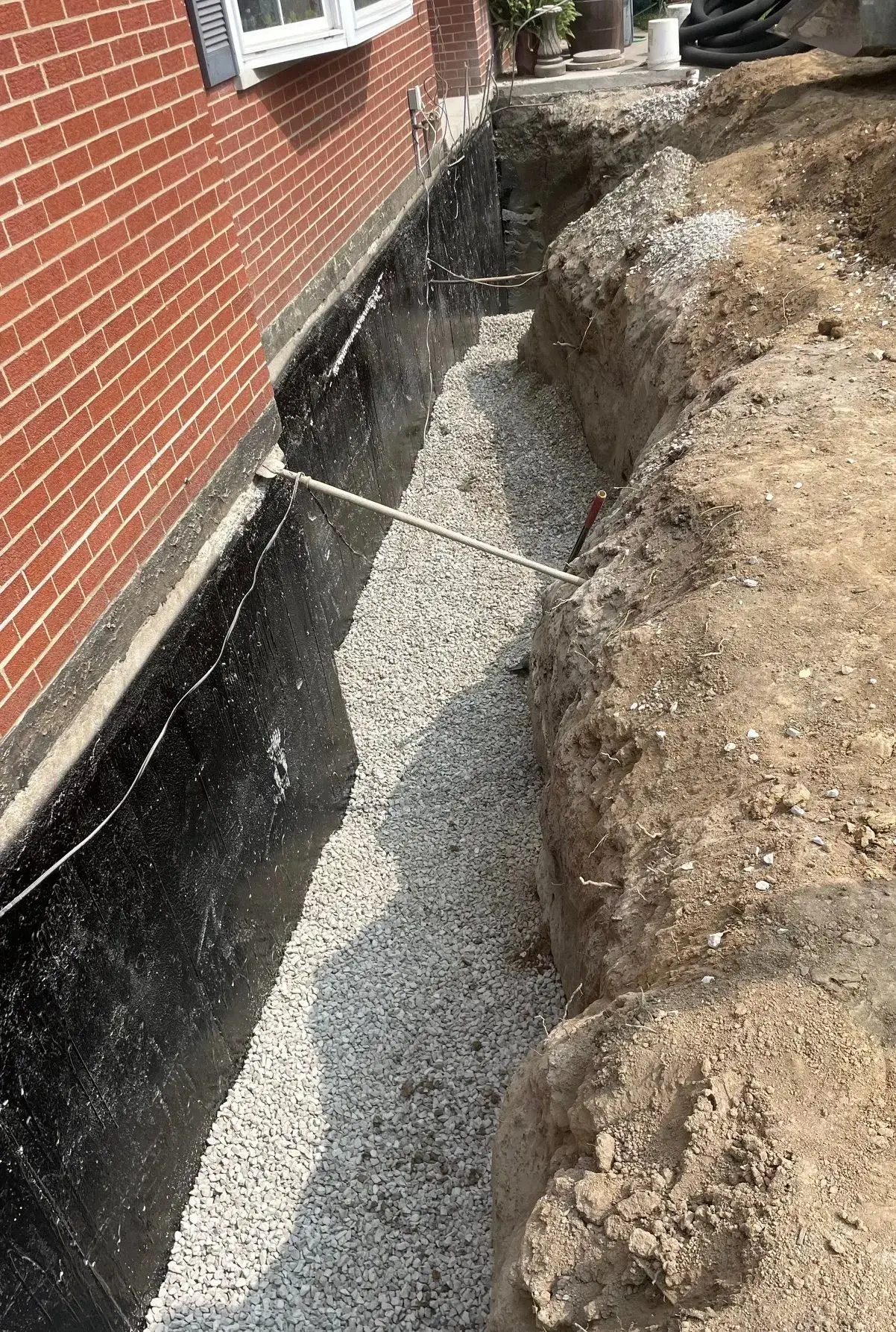
A settled corner, a stair-stepping crack in the block, or a garage floor pulling away from the wall means the ground moved. That's an excavation problem wearing a concrete costume, and it's exactly our lane.
What this covers
Concrete driveways
New pours and full replacements, sloped to shed water instead of holding it, on a base compacted to carry your vehicles for the long haul.
Patios and sidewalks
Flatwork around the house, graded to move water away from your foundation instead of toward it.
Garage slabs
Flat, true slabs for garages and outbuildings, poured to the elevations your builder or your project calls for.
Pole barn floors
Barn and shop floors on compacted stone, ready for equipment, livestock, or whatever you're parking on them. We can cut the pad too.
Foundation repair
When a foundation settles or takes on water, we dig down to the problem, fix it, and correct the drainage that caused it so it stays fixed.
Tear-out and replacement
Failed driveways, old patios, and broken slabs broken out and hauled away on our own dump trucks, with haul-off built into the job.
What moves the number
We quote after a site walk, not from a satellite photo. These are the honest variables.
Size and thickness
Square footage drives material and labor, and what the slab has to carry drives thickness. A walkway and a truck apron are different pours even at the same footprint.
Tear-out and haul-off
Breaking out old concrete, loading it, and trucking it away is real work. Having our own dump fleet keeps that line item honest, but it's still a line item.
What the base needs
Solid subgrade with a few inches of stone is the cheap version. Soft clay, buried fill, or a wet fragipan lot can mean undercutting, more stone, and drainage before a form ever gets set.
Access and forming complexity
Curves, steps, multiple elevations, and tight backyards all add forming time. A straight rectangle a truck can reach is the simplest thing we pour.
Reinforcement and finish
Wire, rebar, or fiber gets matched to the load, and a broom finish costs less than decorative work. We'll tell you where reinforcement earns its money and where it doesn't.
Drainage tie-ins
If the job includes piping downspouts, adding a channel drain, or regrading beside the new slab, that scope rides along. It's cheaper bundled with the pour than done later as its own job.
How thick should the pour be?
| Pour | Typical thickness | Typical stone base | Built to carry |
|---|---|---|---|
| Sidewalks and patios | 4 in | 3 to 4 in compacted | Foot traffic, furniture |
| Residential driveway | 4 to 5 in | 4 to 6 in compacted | Daily drivers, delivery trucks |
| Garage slab | 4 in | 4 in compacted | Vehicles and storage |
| Pole barn / shop floor | 5 to 6 in | 6 in compacted | Tractors, lifts, loaded trailers |
| Heavy apron or approach | 6 in | 6 in compacted | Dump trucks, RVs, equipment |
Industry-standard guidance, not a quote. The base under the slab matters as much as the inches of concrete, and we build both. Call 859-910-9272.
Concrete or gravel for your driveway?
We build both, so we don't have a horse in this race. The honest answer depends on the length of the drive, the grade, and how you want to live with it.
Concrete
Best for: The stretch near the house and garage, steep sections where stone washes, and anyone done with ruts, dust, and spring potholes.
The trade: Higher cost up front, and it's only as good as the base and joints underneath it. Done right, it's decades of not thinking about your driveway.
Gravel
Best for: Long rural lanes where paving the full run doesn't pencil, and drives that see farm equipment and heavy trucks.
The trade: It needs a fresh load of stone and a regrade every few years, and steep grades will wash. Our trucks deliver and our crew regrades, so upkeep is one call.
How the job runs
01
Start with the ground
We walk the site and look at slope, soil, and where water goes before we talk about concrete. The quote covers the whole job, prep included.
02
Tear out what's failed
If old concrete is coming out, we break it, load it, and haul it off ourselves. No waiting on a demo sub or a roll-off.
03
Build the base
Grade cut to elevation, stone delivered on our own trucks, and everything compacted in lifts. This step is where a slab lives or dies.
04
Form and pour
Forms set, grades checked, and the pour finished clean, with joints placed to control where the concrete wants to crack.
05
Cure and close out
We backfill the edges, clean up the site, and walk you through curing, so you know when it's ready for foot traffic and when it's ready for your truck.
A straightforward driveway or patio usually runs a few working days on site: a day or two for tear-out and base prep, a day to form and pour, and a bit of cleanup after. Then the concrete does its part. Plan on staying off it for a day or two of foot traffic, keeping vehicles off for about a week, and full design strength at around 28 days. Season matters too. Spring through fall is prime pouring weather, and once temperatures sit below about 40 degrees a pour needs cold-weather protection, so we'll tell you straight when the smart move is to hold a job for a better window.
Excavators
Tear-outs, foundation repair digs, and cutting subgrade to elevation.
Skid steers and track loaders
Grading the base, spreading stone, and working the tight spots beside houses.
Rollers and compactors
The step that decides whether the slab lasts: stone compacted in lifts, not just spread.
Dozers
Cutting and shaping larger pads for garages, barns, and shop floors.
triaxle dump fleet
Broken concrete hauled out and stone base hauled in, on our schedule.
We're not a concrete crew that hopes the ground cooperates. We're an excavation company with our own skid steers, rollers, and compaction equipment, backed by a triaxle dump fleet that hauls the tear-out away and brings the stone base in. The part of the slab you never see is the part we do best.
Built for Kentucky ground
Around here, concrete rarely fails because of the concrete. It fails because of what's under it. Northern Kentucky's hillsides weather out of the Kope Formation, a stack of rock that's roughly 75 percent shale, and it breaks down into clay that holds water and moves when it's wet. Up on the ridgetops where most driveways and garages actually get built, soils like Nicholson and Rossmoyne carry a dense fragipan a couple feet down that perches a winter water table right in the zone where a slab's base sits, and the county soil surveys flag the shrink-swell clay in these profiles as a genuine foundation limitation. Pour over that ground without dealing with the water and the clay does the rest.
Then winter finishes the job. This region takes roughly 43 to 45 inches of precipitation a year and cycles through freeze and thaw all season long, so any water trapped under a slab becomes a jack that heaves it a little more every cycle. That's why our pours start below the surface: subgrade cut and proofed, water given somewhere to go, stone compacted in lifts, and the finished slab pitched to shed rain away from the house. After 35 years of digging this specific dirt, we treat every slab as a drainage project that happens to end in concrete.
Questions we hear a lot
Why do concrete driveways crack in Northern Kentucky?
Usually the base, not the concrete. Our clay ground holds water, and freeze-thaw winters heave anything sitting on a soft or poorly drained base. We build the base like dirt work people, compacted stone on solid grade, and place control joints so the concrete cracks where we tell it to instead of where it wants to.
Do you tear out and haul away old concrete?
Yes, and with our own trucks. Tear-out, loading, and haul-off are part of the quote, so you're not lining up a separate demo crew or renting a dumpster before the new pour can happen.
Can you pour a floor for my pole barn?
Yes. Barn and shop floors are steady work for us in Grant County and the surrounding counties. If the building isn't up yet, we can cut and compact the pad first, which means the pad and the floor are engineered by the same crew.
Do you repair foundations or only pour new concrete?
Both. Foundation repair usually starts with excavation, which is our home turf. We expose the problem, make the repair, and fix the grading or drainage that let water sit against the wall in the first place.
How long until I can use my new concrete?
Concrete needs time to cure before it takes weight, and the timeline depends on the pour and the weather. Before we leave, we'll tell you exactly when it's safe to walk on and when it's safe to drive on, so there's no guessing.
What areas do you serve for concrete and flatwork?
We're based in Crittenden, two minutes off I-75 exit 166, and we pour throughout Grant, Boone, and Kenton counties and across Northern Kentucky and Greater Cincinnati.
How much does a concrete driveway cost in Northern Kentucky?
It comes down to size, thickness, whether old concrete is coming out, and what the base needs, which on our clay ground can be the biggest variable of all. We walk the site, look at the ground, and give you one firm number that covers tear-out, base, and pour. One crew mobilizing once is also cheaper than three subs mobilizing separately.
How thick should a concrete driveway be?
Four inches is the residential standard, five where heavier trucks will sit, and six for an apron that takes real weight. But thickness is only half the spec. Four good inches on a compacted stone base outlasts six inches poured over soft clay, and the base is the part we're known for.
What is the best time of year to pour concrete in Kentucky?
Spring through fall is prime. Once temperatures hang below about 40 degrees, fresh concrete needs cold-weather protection to cure right, so late-season pours get scheduled honestly instead of gambled. Hot summer pours are fine, they just get extra attention on curing so the slab doesn't dry faster than it strengthens.
What causes a concrete slab to sink or settle?
The ground under it moved. Usually that's fill that was never compacted, water washing fines out of the base, or a downspout dumping at the slab edge for years. We fix the cause, not just the concrete: rebuild the base, correct the water, then pour. That's the same thinking we bring to foundation repair.
Concrete & Flat Work near you
Local pages for the towns where this work keeps our crews busiest.
Often paired with
Ready to talk concrete & flat work?
Walk us through the project and we'll walk the site. Straight answers, firm numbers, one contractor.